overview
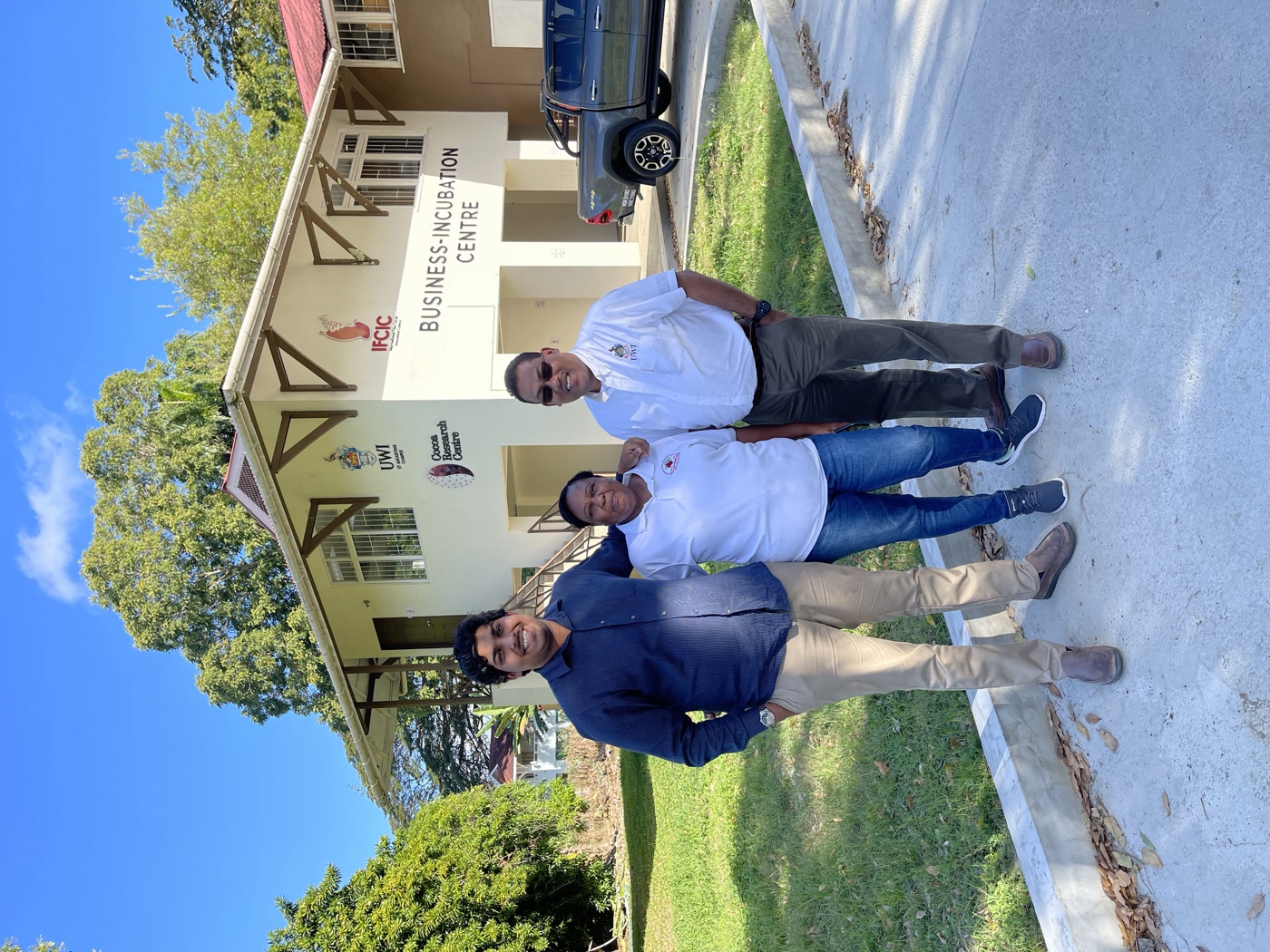
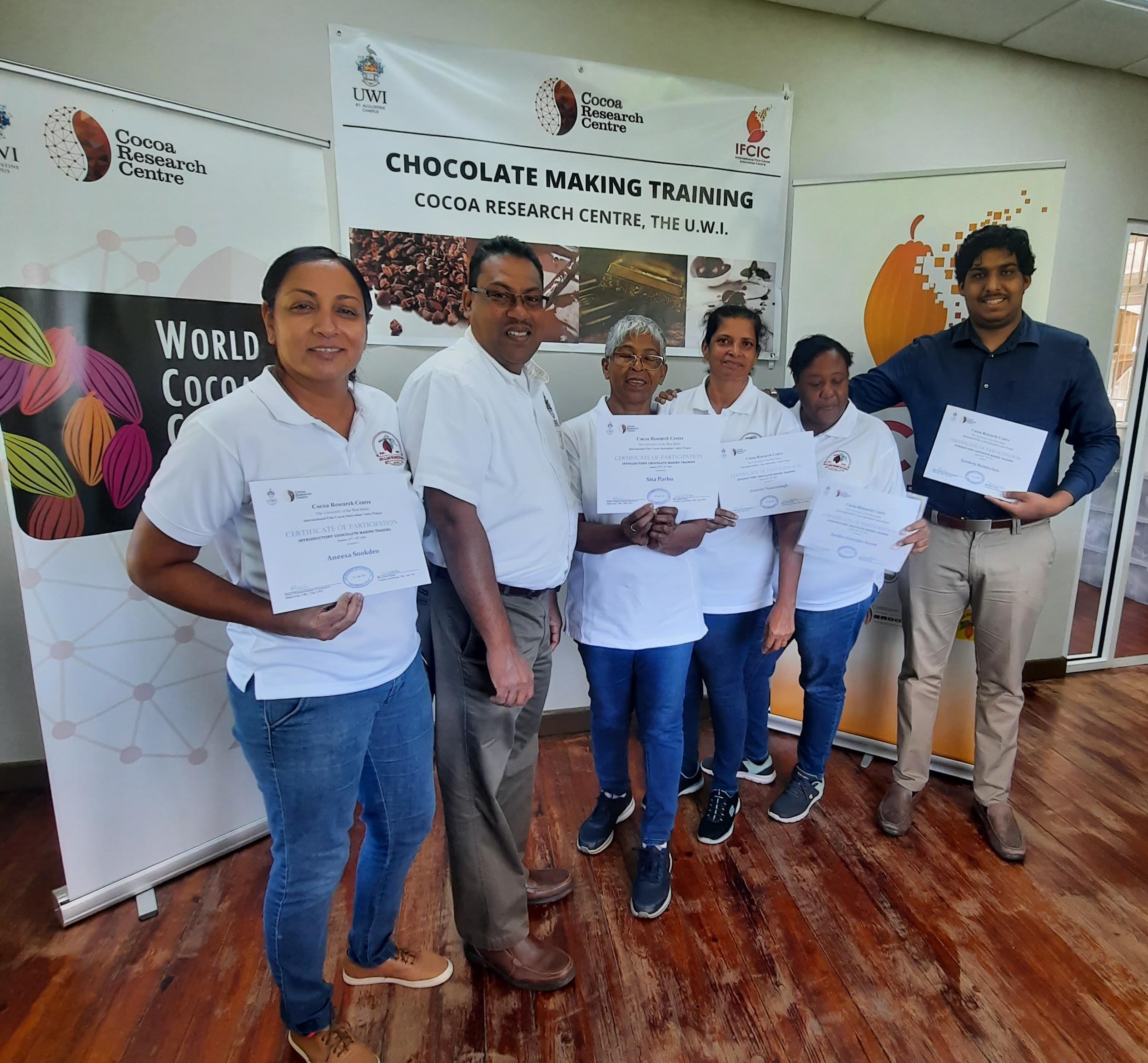
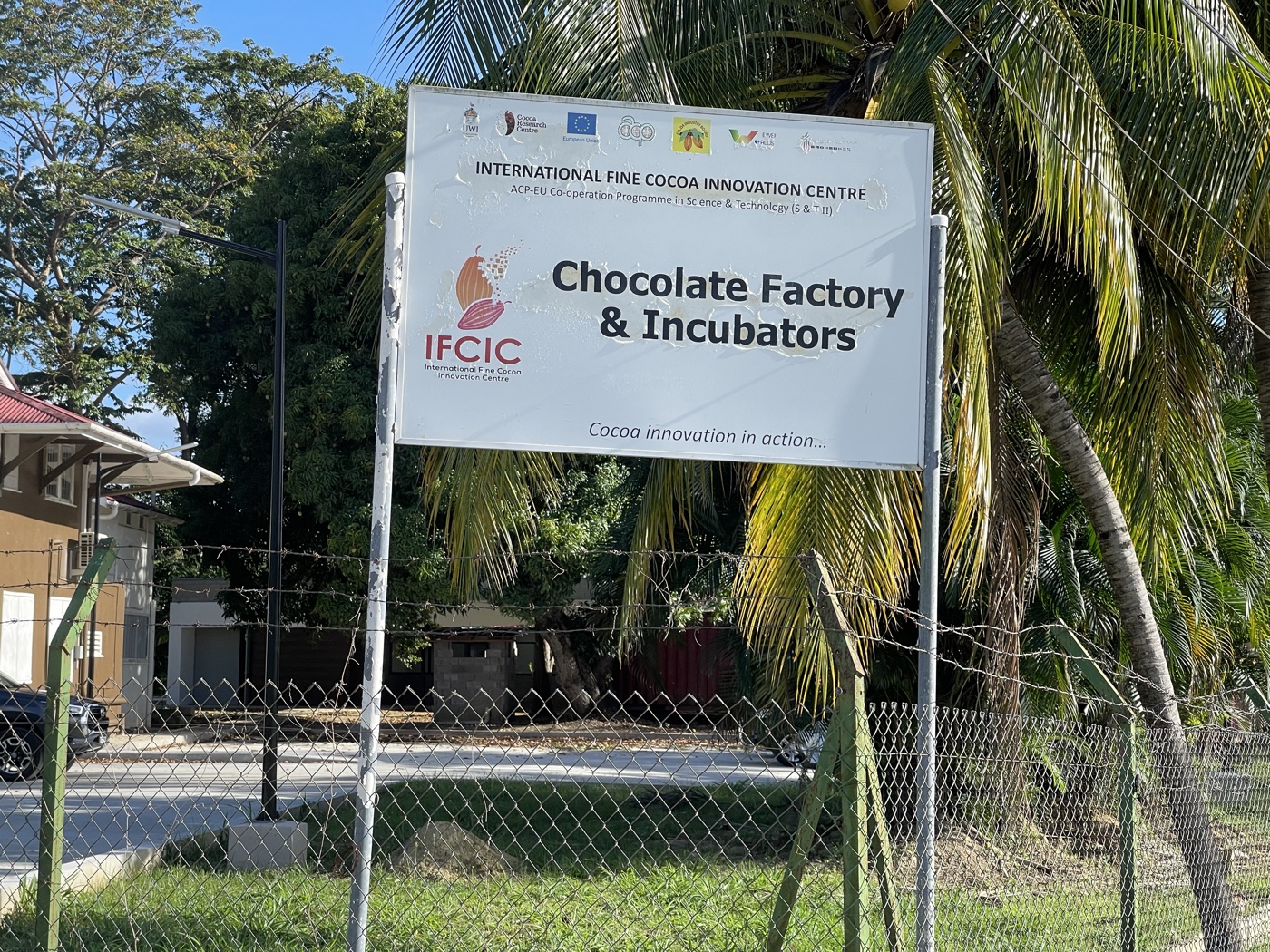
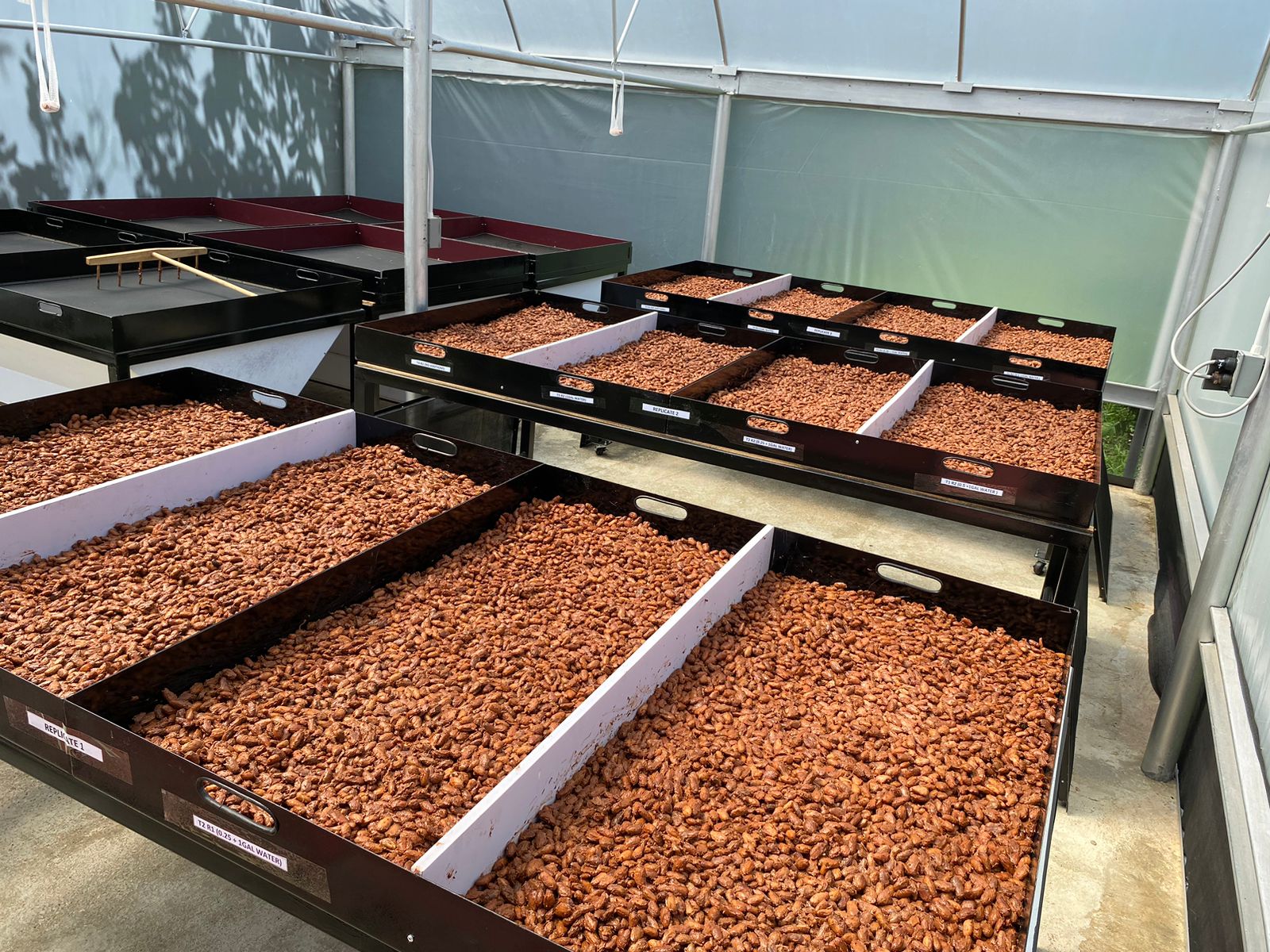
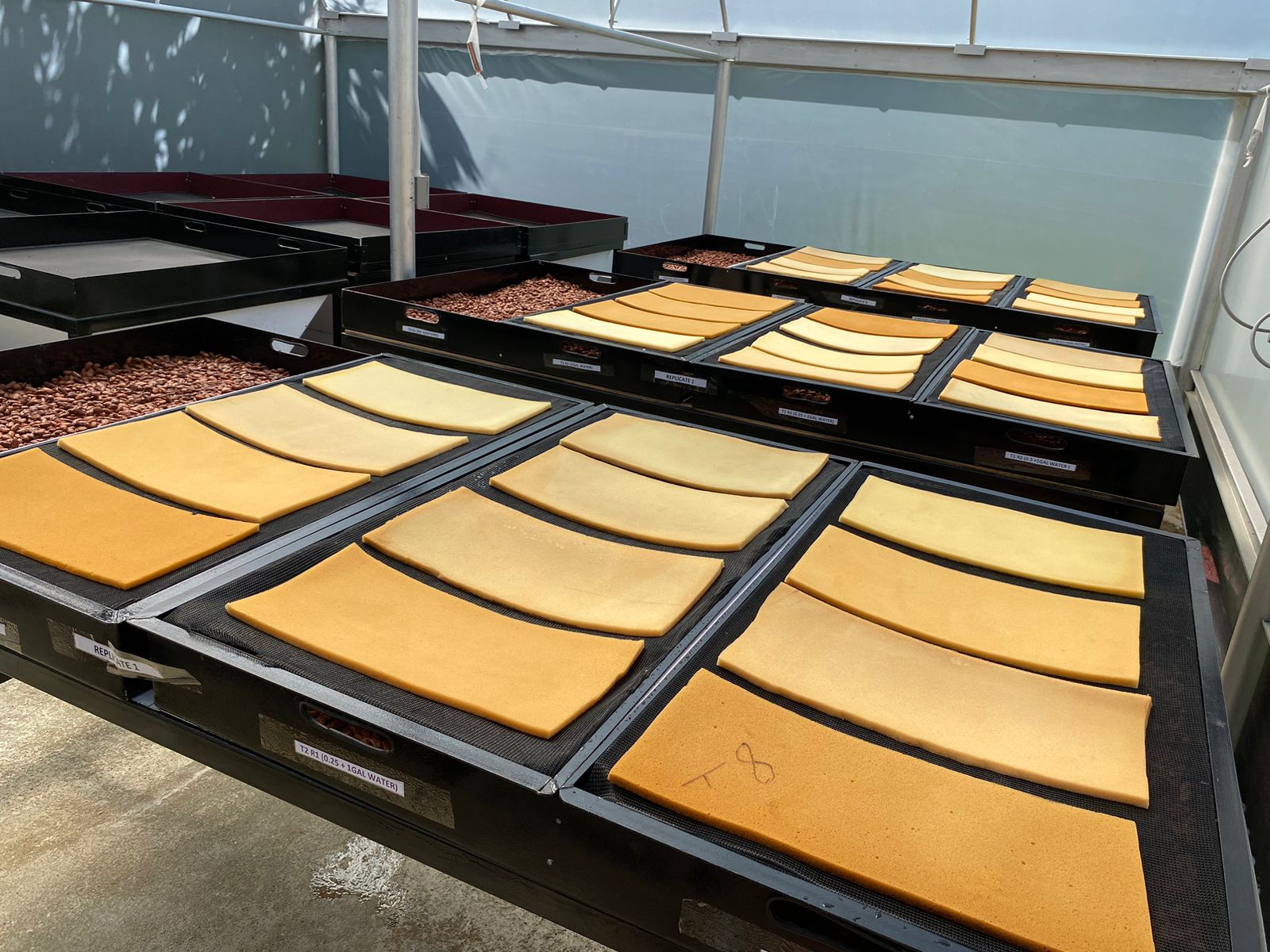
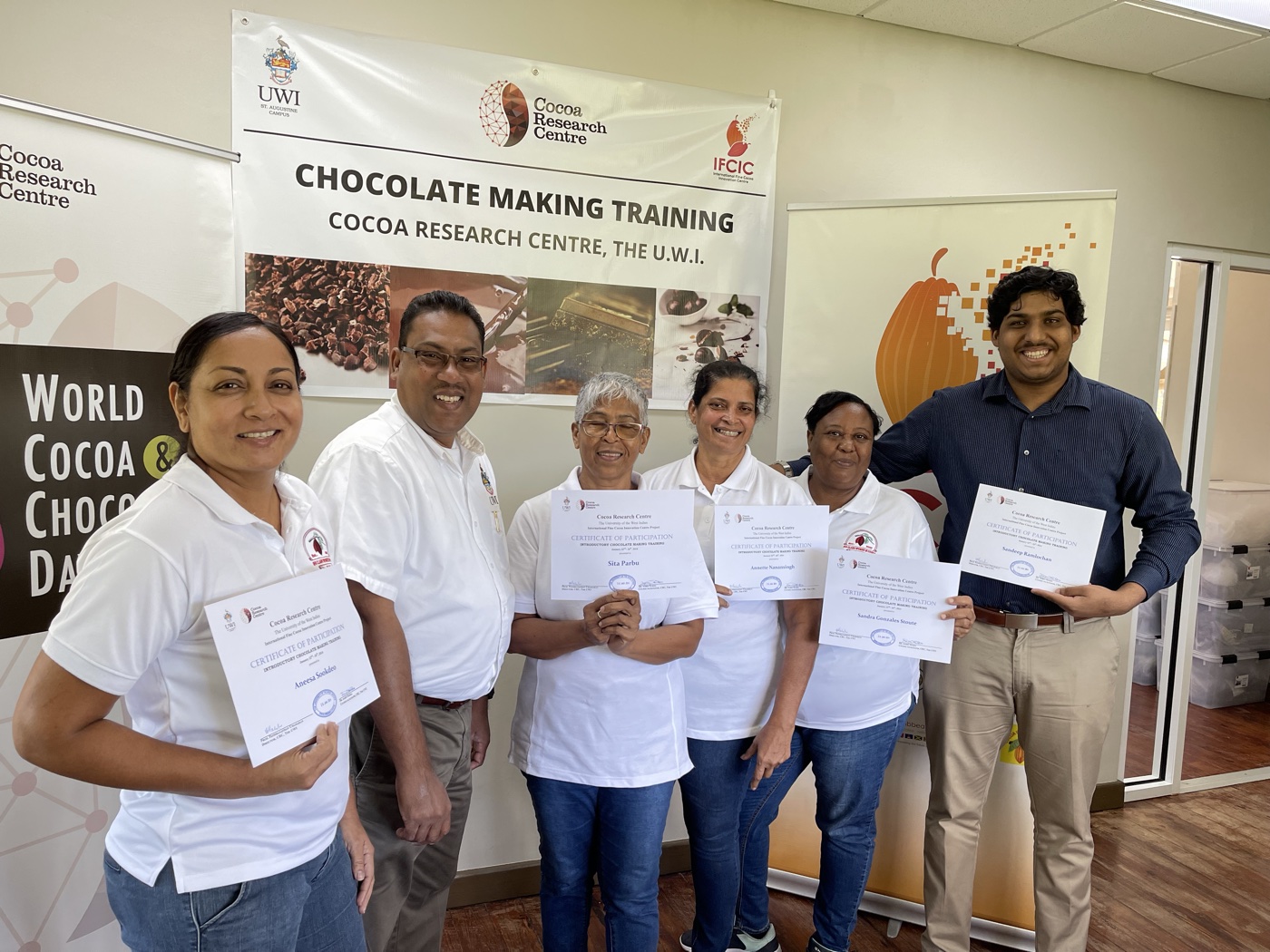
I was at the UWI Cocoa Research Centre doing two things at once. The research side was about mold: specifically, how fungal growth gets into cacao beans when the weather makes drying slow, and whether you can arrest it without wrecking the flavour. It matters more than it sounds. Fine-flavour cocoa spends years getting to the drying stage, and a bad wet season can compromise a whole batch in the last step before it ships. The other side was the CRC's chocolate production course, which walked through the full process from harvested pod to finished bar. I made bars. They were good.
the plantation
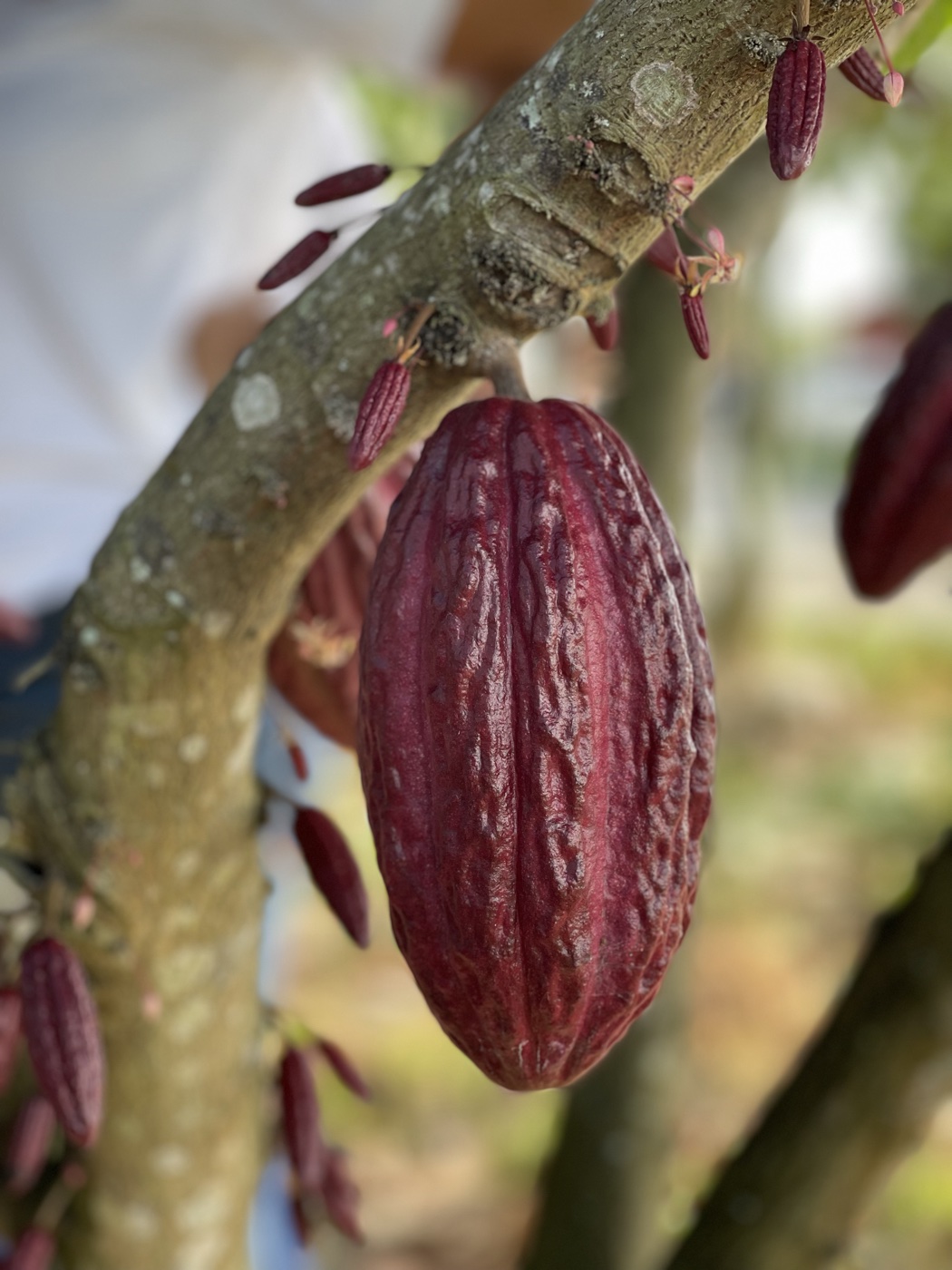
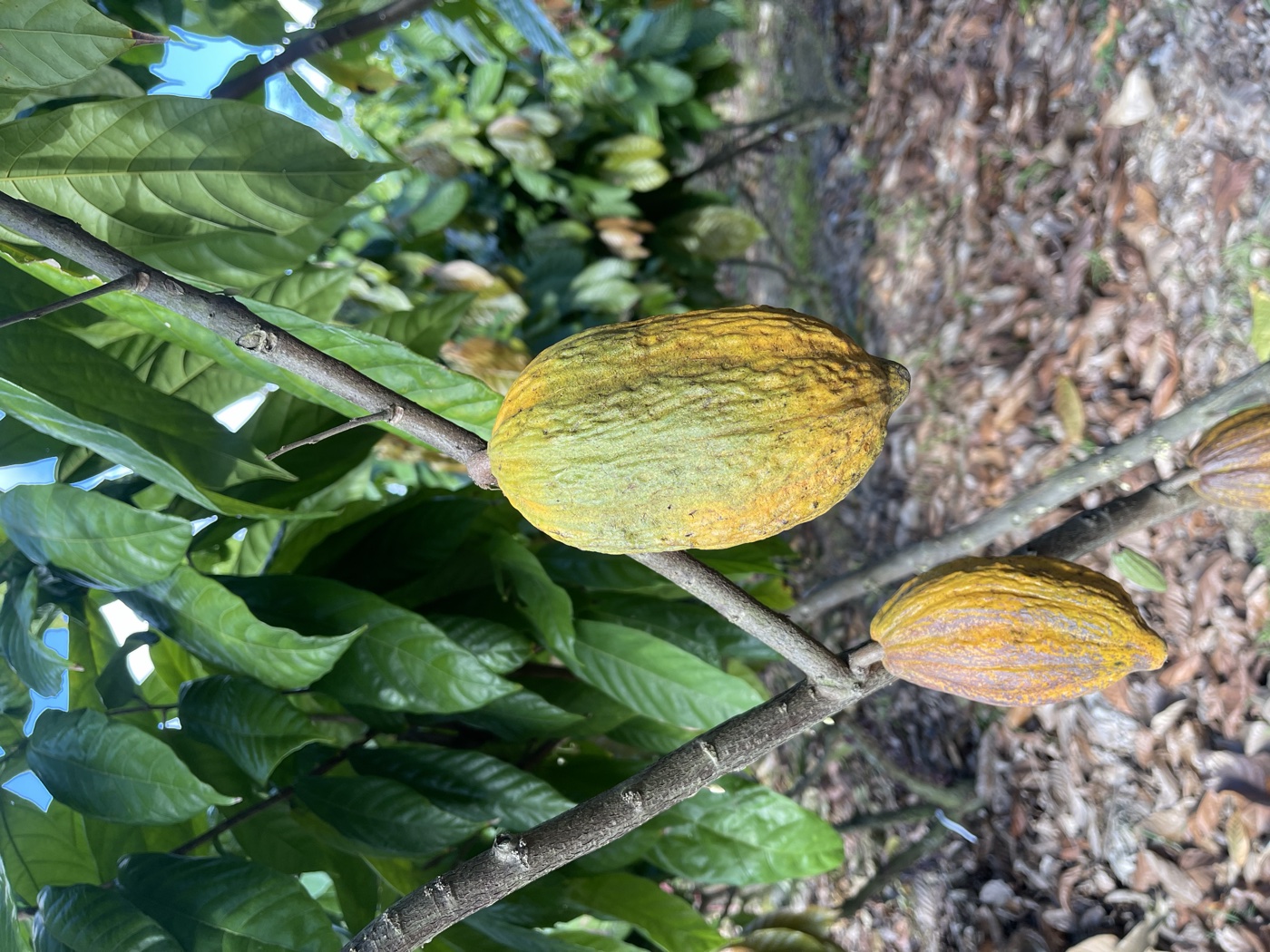
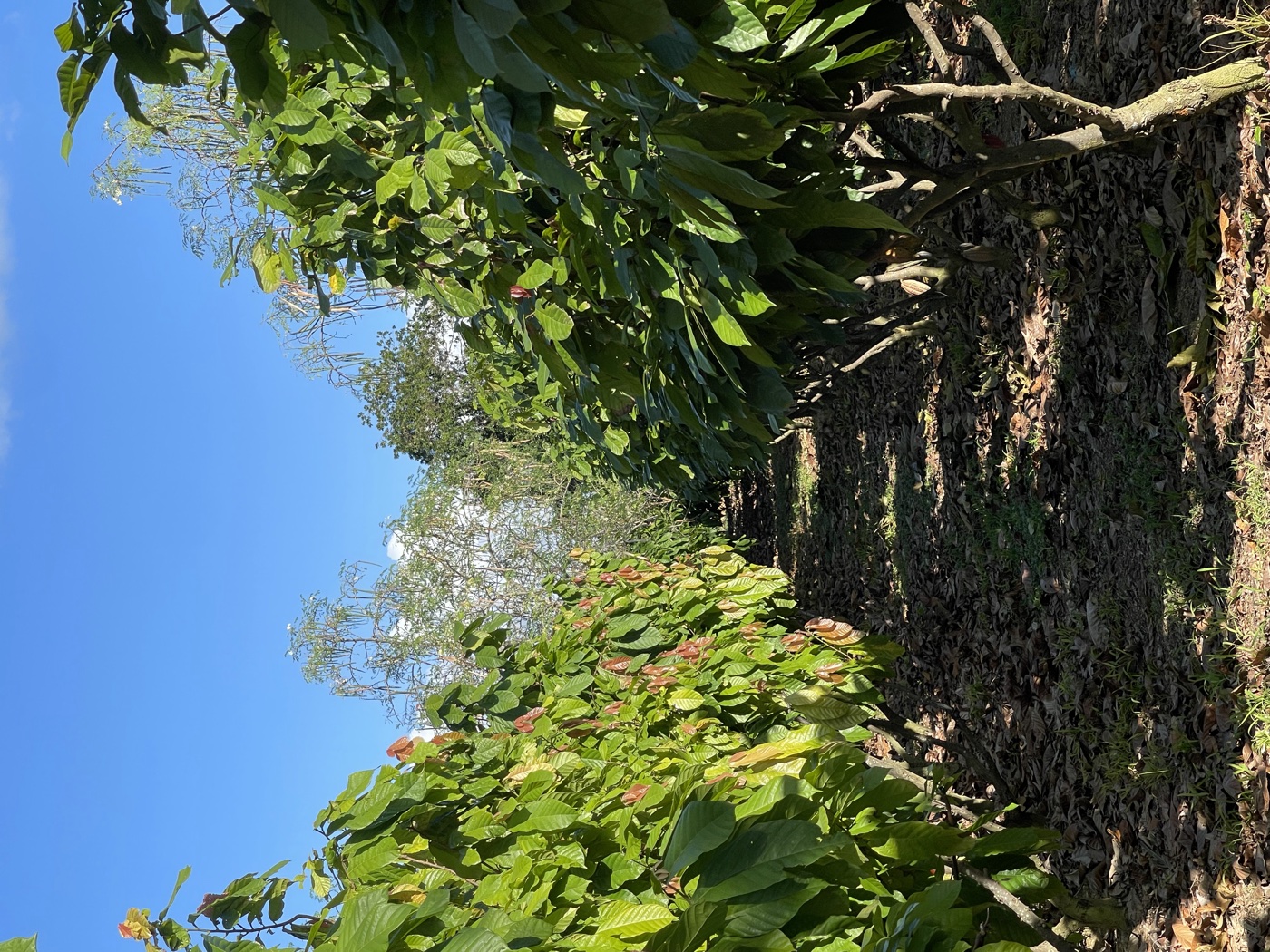
Theobroma cacao is cauliflorous: pods grow straight out of the trunk, not from new shoots. The CRC estate grows both Trinitario and Nacional varieties.
fermentation and drying
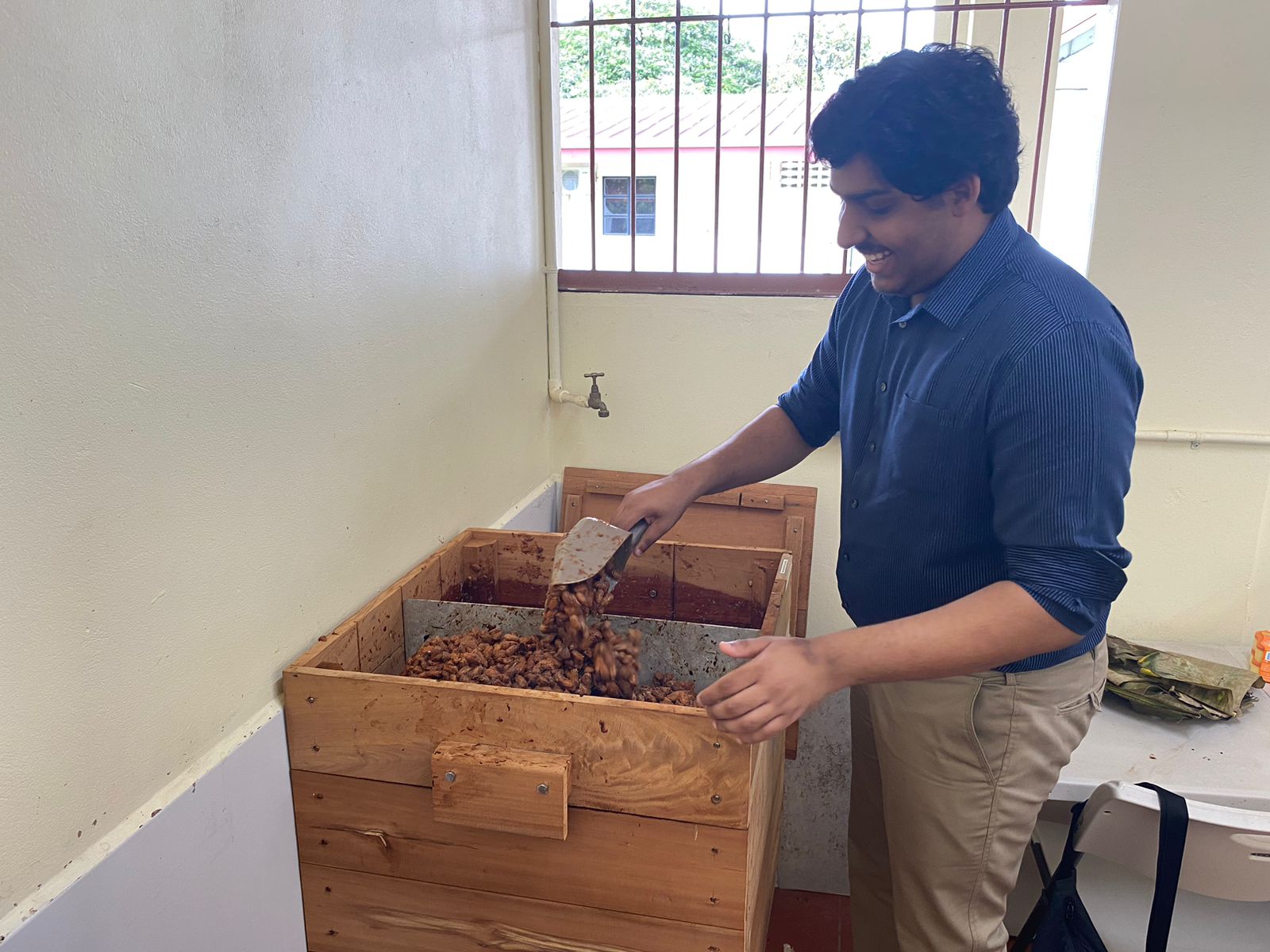
Freshly harvested beans go into wooden fermentation boxes for five to seven days. Turning them between boxes keeps oxygen moving and temperature even. After fermentation they dry on raised beds, and that is where fungal pressure builds if the weather is not cooperating.
bean quality and sorting
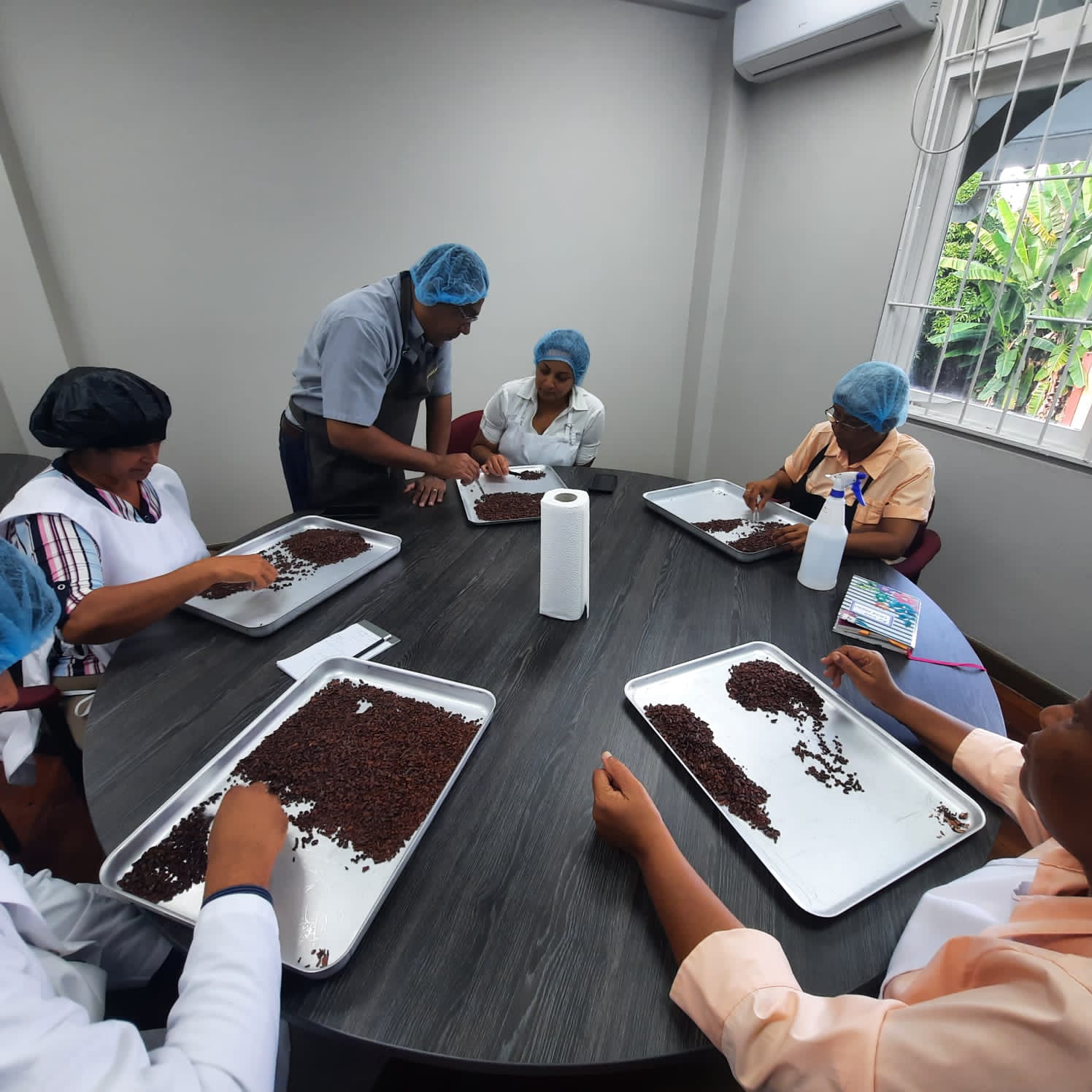
Cut tests are the standard quality check. Beans are cut lengthwise and graded by internal colour and texture, which tells you how deep the fermentation went and whether flavour precursors actually developed.
chocolate production
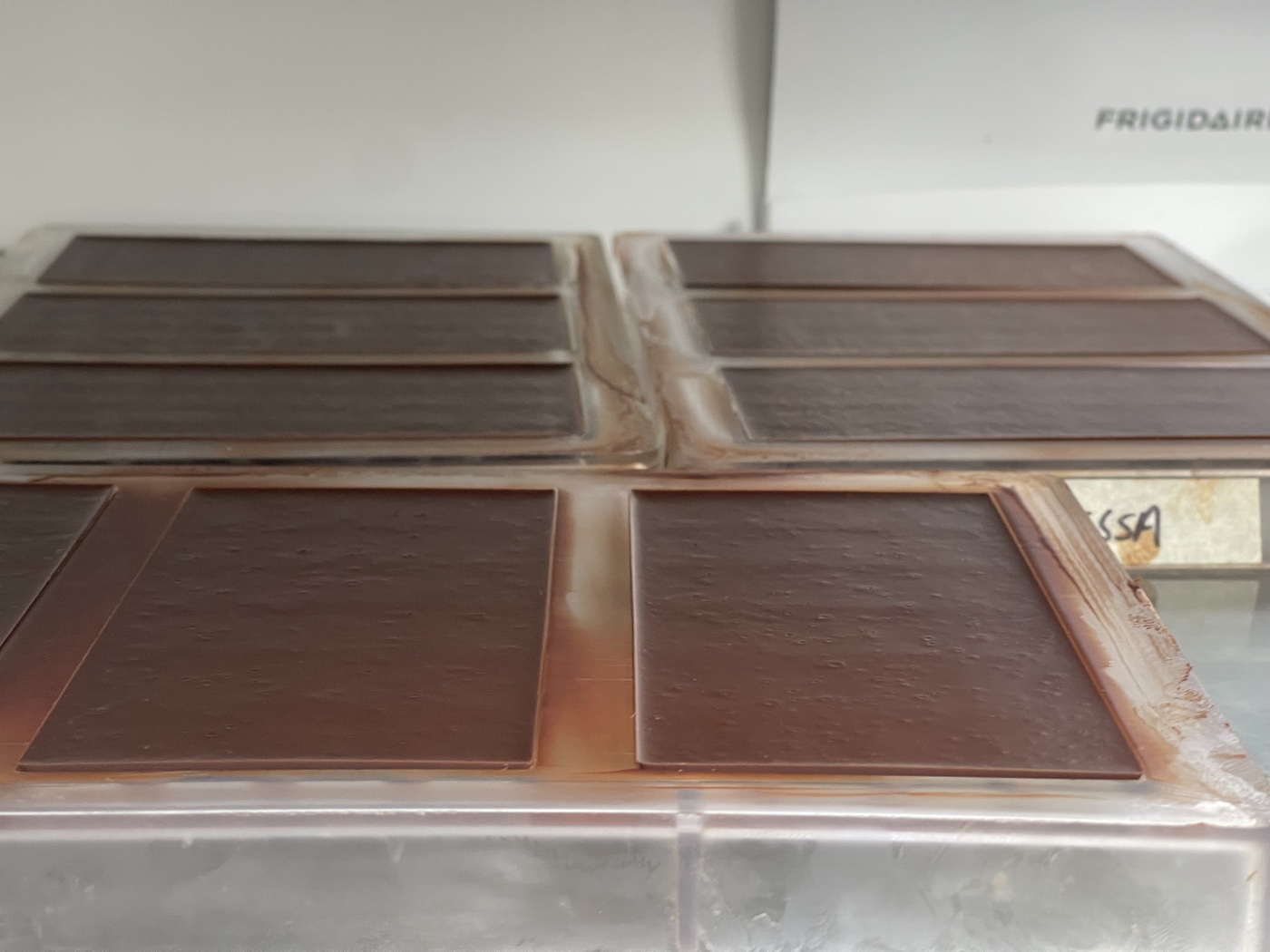
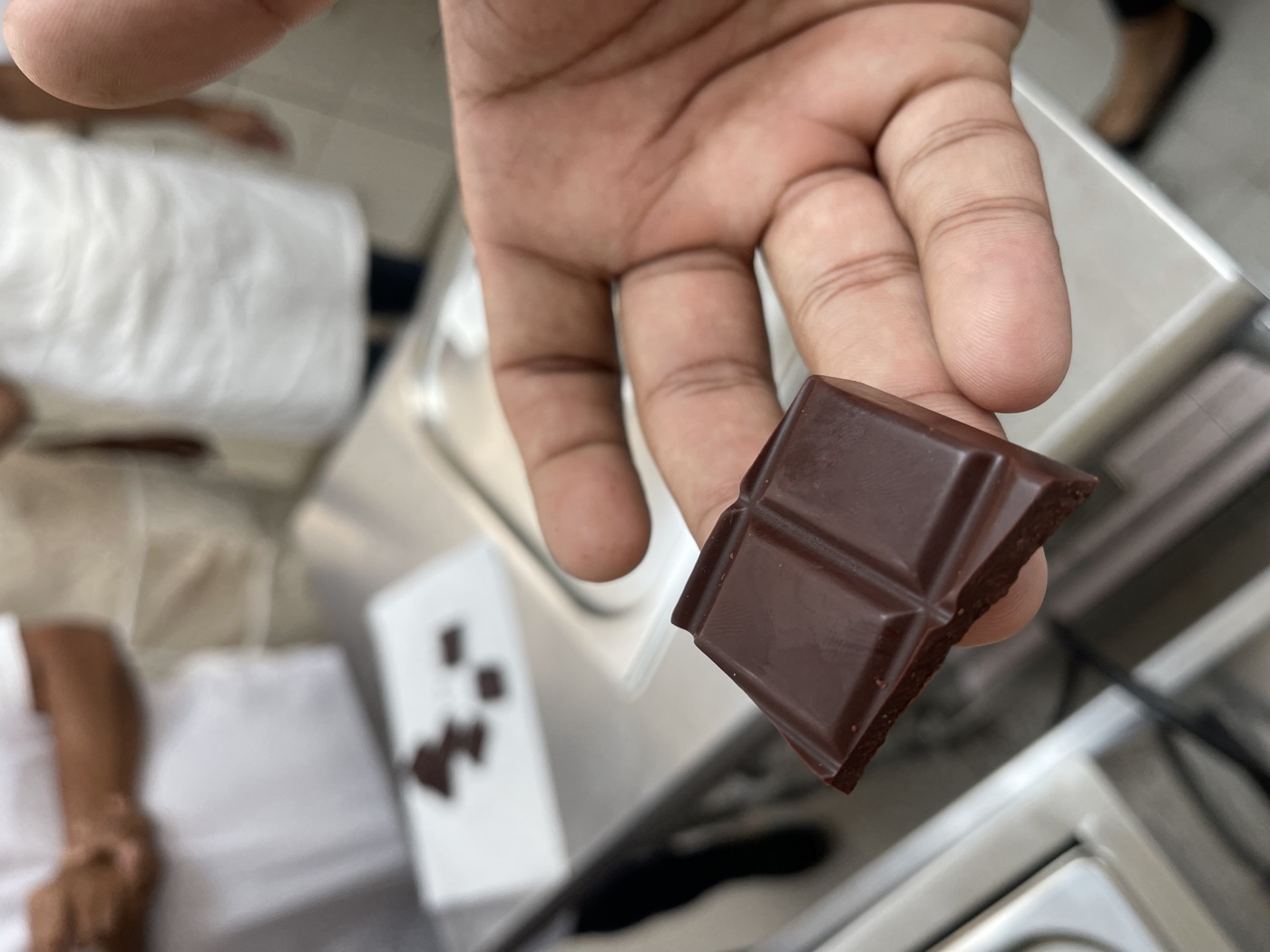
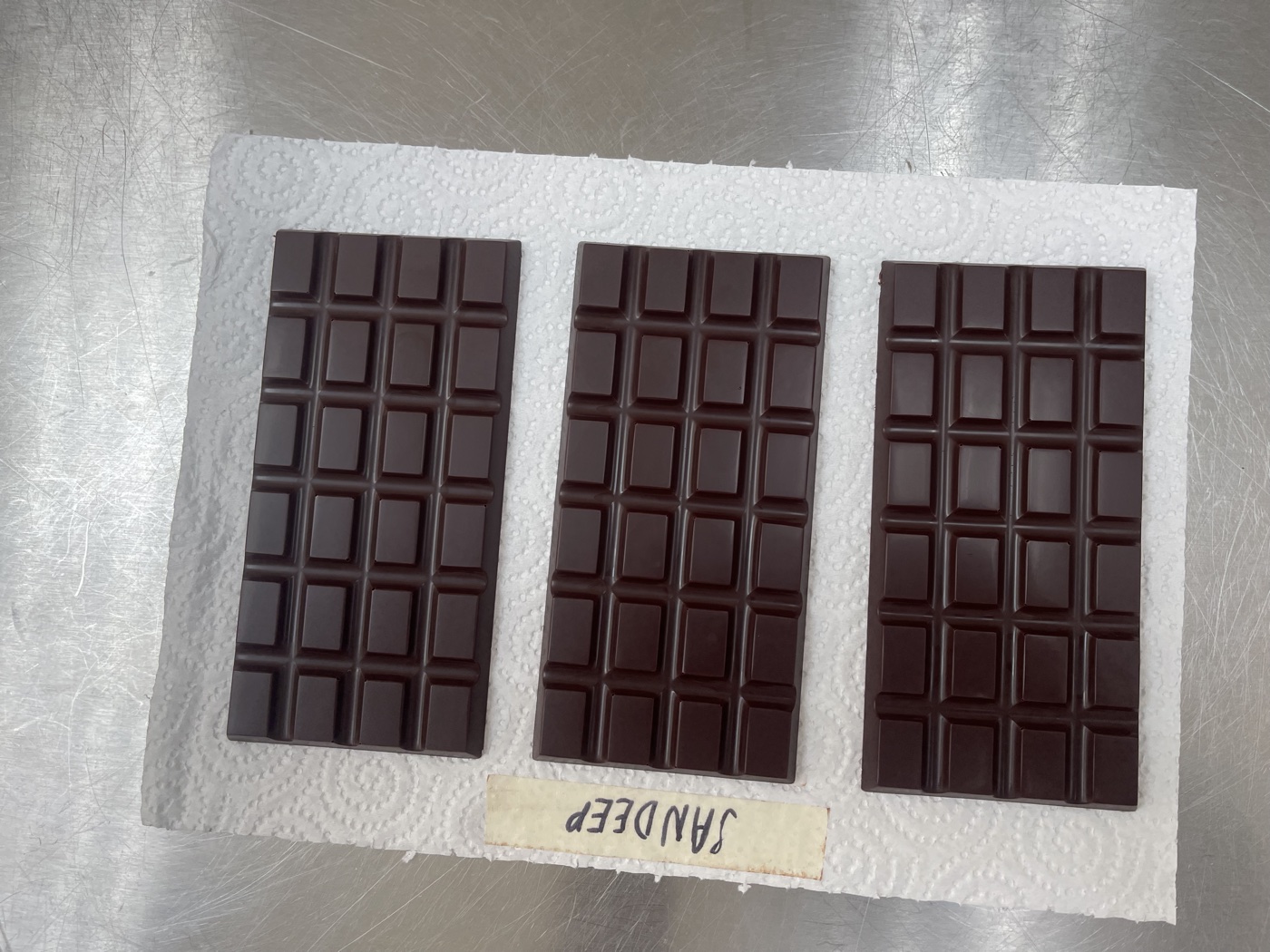
The production course covered everything: roasting, winnowing, conching, tempering, moulding. Tempering is the tricky step. Getting cocoa butter into Form V crystal structure is what gives chocolate its snap and gloss, and it is easy to get wrong.
the team